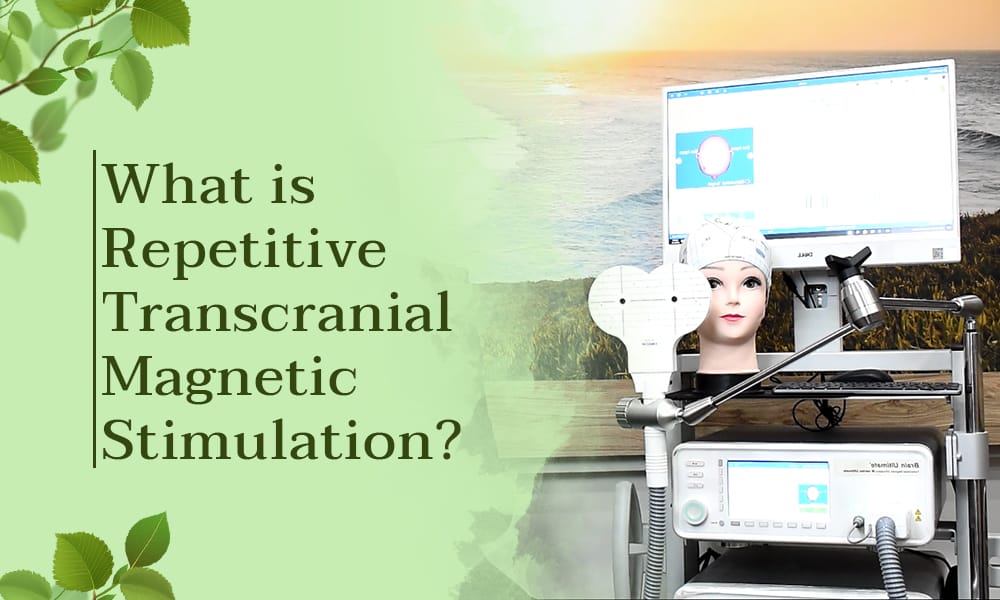
In the past century, technological advancements in the field of neuroscience have led to groundbreaking techniques to understand the functioning of the human brain and develop treatments for various brain-related medical conditions. Repetitive Transcranial Magnetic Stimulation (rTMS) is one such remarkable non-invasive and relatively painless technique that has gained significant attention in recent years. Non-invasive technique means it does not involve performing surgery and cutting the body part or inserting some instrument to bring change.
This novel technique utilizes magnetic fields to stimulate specific areas of the brain, offering a promising avenue for the treatment of several neurological and psychiatric disorders including depression, obsessive-compulsive disorder, stroke-related conditions, neuropathy etc. that have consistently failed to respond to other therapies. In this article, we will delve into the principles behind rTMS, its applications, effectiveness, potential risks, and its position in modern medicine.
Repetitive Transcranial Magnetic Stimulation (rTMS) Services in Karachi
Book An Appointment For Intake Session / Consultancy / OPD charges Rs. 1000/- only
Book an Appointment
Understanding Repetitive Transcranial Magnetic Stimulation (rTMS):
Repetitive Transcranial Magnetic Stimulation, or rTMS, is a form of brain stimulation that involves the application of repetitive magnetic pulses to specific regions of the brain. The technique was first developed in the 1980s and has since undergone extensive research and refinement. The magnetic pulses are generated by a copper coil placed near the scalp, which, when activated, generates a magnetic field that can penetrate the skull and reach targeted brain areas.
The brain's ability to change its activity in response to either internal or external stimulation is called neuroplasticity. The fundamental principle behind rTMS lies in the ability to induce changes in neuronal activity through the repetitive application of magnetic fields. When the magnetic pulses reach the brain, they interact with the electrical activity of neurons, leading to changes in brain circuits and potentially correcting abnormal brain activity associated with various neurological and psychiatric conditions.
Before initiating rTMS treatment, a thorough assessment is conducted to determine the appropriate brain regions for stimulation and the optimal stimulation parameters. The patient is seated comfortably, and the rTMS coil is placed on the scalp over the targeted area. During the session, a series of magnetic pulses are delivered, lasting for several seconds, with brief pauses in between. Each session typically lasts for around 20-30 minutes, and a course of treatment often involves multiple sessions over several weeks. The number of sessions, intensity and duration vary from case to case.


Applications and Uses of rTMS:
Treating Major Depressive Disorder (MDD):
-
- MDD is characterized by persistent sadness, feelings of hopelessness, appetite changes, sleep disturbances, social withdrawal, and more. The application of rTMS in treating depression has been extensively studied, particularly in cases of treatment-resistant depression where conventional therapies have proven ineffective. Promising results have been observed when stimulating the left dorsolateral prefrontal cortex, an area linked to mood regulation, to alleviate depressive symptoms. The success rate of TMS for depression is promising. Response rates for depression are between 30 and 64 percent.
Addressing Obsessive-Compulsive Disorder (OCD):
-
- rTMS has also been investigated as a potential treatment for OCD, a condition characterized by distressing thoughts and repetitive behaviors. Studies have shown that targeting the cortico-striatal circuitry associated with OCD through rTMS can reduce symptoms and improve the quality of life for some patients.
Managing Neuropathic Pain:
-
- Chronic pain conditions like fibromyalgia and neuropathic pain can severely impact individuals' lives. rTMS has been explored as a therapeutic option to manage such conditions. By stimulating specific brain areas responsible for pain processing, rTMS may help modulate pain perception and provide relief.
Assisting in Stroke Rehabilitation:
-
- In the realm of neurorehabilitation, rTMS has been researched as a tool to aid in stroke recovery. By through stimulating the unaffected hemisphere or inhibiting the overactive hemisphere after a stroke, rTMS may encourage neural plasticity and support functional recovery.
Adjunctive Treatment for Schizophrenia:
-
- For patients with schizophrenia, rTMS has been studied as an adjunctive treatment to traditional antipsychotic medications. Targeting certain brain regions may help reduce auditory hallucinations and improve cognitive functioning. Marzouk et al. (2020) found mixed evidence for TMS's effectiveness in managing auditory hallucinations. Further research is needed to investigate the effects of this technique on other symptoms including delusions and thought disorder.
Nicotine Addiction:
-
- Nicotine releases dopamine neurotransmitters in the limbic system which causes pleasure. However, with repetitive use of nicotine, a person develops tolerance where more and more drug is required to produce the intended effects. The person is now dependent on nicotine. Li et al. (2013) showed reduced craving in patients addicted to nicotine following high-frequency rTMS sessions.
Alzheimer's Disease and Cognitive Enhancement:
- Though still in its early stages, research suggests that rTMS may hold potential in enhancing cognitive functioning for individuals with mild cognitive impairment or Alzheimer's disease. By stimulating specific memory-related brain regions, rTMS could potentially offer cognitive benefits.
Effectiveness of rTMS:
The effectiveness of rTMS varies depending on the condition being treated, the targeted brain region, and individual patient factors. For some patients, rTMS can produce significant improvements, while for others, the effects may be more modest. It is crucial to note that rTMS is generally considered safe, especially when compared to invasive brain stimulation methods.

rTMS services in Karachi
Book An Appointment For Intake Session / Consultancy / OPD charges Rs. 1000/- only
Book an Appointment
Side Effects of rTMS:
Common side effects of rTMS are usually mild and transient, including headaches, scalp discomfort, light-headedness during or after a session, and mild facial muscle contractions. Symptoms like headaches and lightheadedness usually go away after several treatments. Serious adverse events are rare, but as with any medical procedure, there are some risks involved. Patients undergoing rTMS should be carefully screened for any contraindications, such as metal implants in the head, a history of seizures, pregnancy or planning to conceive, history of drug abuse within the last three to six months, or any severe medical condition as these may increase the risk of adverse effects.
Conclusion:
Repetitive Transcranial Magnetic Stimulation (rTMS) represents an exciting frontier in neuromodulation and brain health. The ability to non-invasively modulate brain activity using magnetic fields opens up new possibilities for treating various neurological and psychiatric conditions. While rTMS has shown promise as an effective and safe therapeutic tool, ongoing research and clinical trials are essential to refine its procedure.
rTMS services in Karachi
Book An Appointment For Intake Session / Consultancy / OPD charges Rs. 1000/- only
Book an Appointment