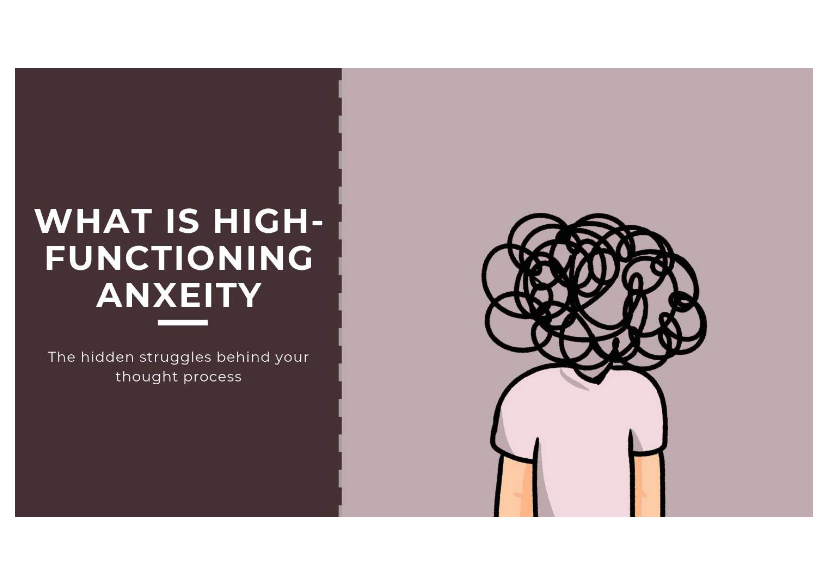
You are getting everything done, so why do you feel like you are falling apart inside? You show up to work, meet deadlines, answer messages, attend gatherings, and probably hear people say, “You handle everything so well.” But what they do not see is what happens inside your head.
You may spend hours replaying a conversation, worrying about a mistake that nobody else noticed, preparing for every possible problem, or wondering whether someone is upset with you. From the outside, you seem calm and capable. Inside, you may feel exhausted from constantly trying to keep everything under control. This is often what people mean when they describe high-functioning anxiety.

Different Features of High-Functioning Anxiety
- Hypervigilance
People experiencing high-functioning anxiety often prepare for everything. You check your work again and again. You think through every possible question before a meeting. You arrive early because being late feels unbearable. You make backup plans because uncertainty feels threatening. Psychologically, this can resemble hypervigilance, a state in which the mind remains unusually alert to possible threats.
Preparation can be helpful, but anxiety changes its purpose. You are no longer preparing because you want to be ready. You are preparing because you are afraid of what might happen if you are not. And sometimes, that fear turns into people-pleasing and reassurance-seeking. Saying “yes” when you want to say “no” can feel easier than disappointing someone. You may constantly adjust yourself to keep others happy, while quietly becoming more exhausted.
- Rumination
One of the hardest parts of anxiety is the internal chatter. Did I say something wrong? What if they misunderstood me? What if I fail? What if something goes wrong? Should I send another message? Did I forget something?
This can become rumination, where the mind repeatedly goes over situations, mistakes, or possible problems without reaching a satisfying conclusion. In conditions such as Generalized Anxiety Disorder, excessive and difficult-to-control worry can become a persistent part of everyday life.
Even when everything is perfectly fine, your mind may continue searching for the next problem. Your body may be still, but your mind rarely feels that way.

- Obsessive-Compulsive Personality Disorder (OCPD)
Perfectionism is often praised as ambition, but sometimes it functions as a way of protecting yourself from criticism, rejection, or failure. You may believe that if you work harder, make fewer mistakes, and keep everyone satisfied, nothing will go wrong.
But perfection has no finish line. The more you demand from yourself, the more frightening mistakes become. Eventually, even small imperfections can feel like personal failures.
OCPD is a clinical condition that is another feature of high-functioning anxiety. You are not necessarily trying to be perfect because you love excellence. Sometimes, you are trying to be perfect because you are afraid of what might happen if you are not.
When Anxiety Becomes Clinically Significant
Everyone worries sometimes. The concern begins when anxiety starts controlling your choices, relationships, sleep, work, or ability to enjoy ordinary moments. If you constantly feel mentally exhausted, struggle to switch off your thoughts, avoid situations because of fear, or feel that you must keep everything under control just to get through the day, it may be time to seek professional support.
A therapist can help identify the patterns behind persistent worry, perfectionism, avoidance, and people-pleasing, and develop healthier ways of responding to anxiety. Seeing a therapist does not mean you have failed at coping. It means you no longer have to carry everything alone.
You do not have to wait until your life falls apart before asking for help. Sometimes, the person who looks like they are handling everything is the person who most needs someone to ask, “How are you really doing?”

If your “I’m fine” has started to feel like a daily performance, it may be time to talk to someone. At Transformation, professional support can help you understand what is happening beneath the surface and take steps toward feeling more at ease. Because looking strong does not mean you have to struggle alone.