- Jofa Tower 5th floor, SB-23, Block 13 C, Main University Rd, Gulshan-e-Iqbal, Karachi.
- +92 322 3746726
- tis@transformation.com.pk

Psychiatrist vs Psychologist: What’s the Difference?

9 Signs Your Child Needs Psychotherapy
July 31, 2026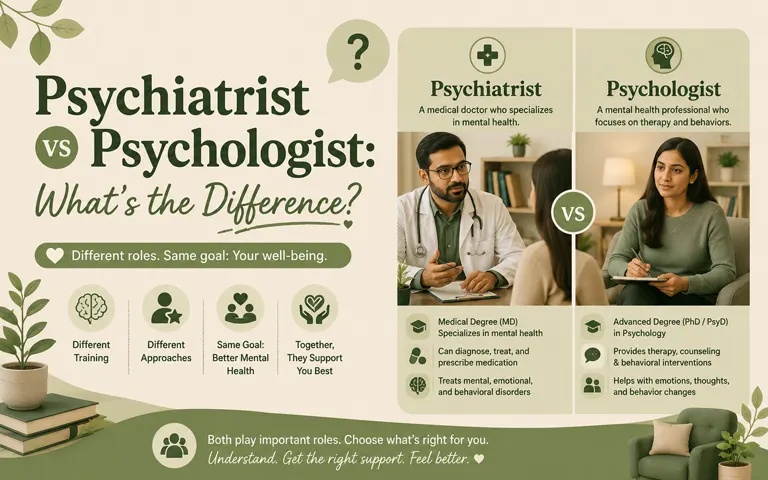
When you’re struggling with your mental health, knowing that you need help is already an important first step. But then comes another question: Who should you actually see? A psychiatrist or a psychologist?
The two professions are often confused, and understandably so. Both work in the field of mental health, both help people navigate emotional and psychological difficulties, and both can play an important role in recovery. However, their training, responsibilities, and approaches are different.
Understanding these differences can make it easier to find the kind of support you need.
Who is a Psychiatrist?
A psychiatrist is a medical doctor who specializes in mental health. Because psychiatrists have medical training, they can assess mental health conditions from both a psychological and medical perspective. They can diagnose psychiatric disorders, prescribe medication, and monitor how a person responds to treatment.
Psychiatrists commonly work with conditions such as depression, anxiety disorders, bipolar disorder, schizophrenia, ADHD, obsessive-compulsive disorder (OCD), post-traumatic stress disorder (PTSD), and other mental health conditions.
They may also consider whether physical or biological factors are contributing to a person’s symptoms. Changes in sleep, appetite, energy, concentration, mood, or behavior can sometimes provide important clues about a person’s overall mental health.
Therapeutic Approaches
Psychiatrists may use several approaches depending on the individual’s needs. Medication management is one of the key areas that distinguishes psychiatric care from psychological therapy. Antidepressants, anti-anxiety medications, mood stabilizers, antipsychotics, and other psychiatric medications may be prescribed when clinically appropriate.
Some psychiatrists also provide psychotherapy, while others work alongside psychologists or therapists who provide regular counselling and therapy.
In more complex situations, a psychiatrist may combine medication management with psychotherapy or coordinate care with other mental health professionals.
Main Goal
The main goal of a psychiatrist is to assess, diagnose, and treat mental health conditions while considering the person’s overall psychological and biological well-being. Their role isn’t simply about prescribing medication. It is about understanding what may be contributing to a person’s symptoms and determining the most appropriate course of treatment.
Who is a Psychologist?
A psychologist specializes in understanding human thoughts, emotions, behavior, and psychological processes. Unlike psychiatrists, psychologists are generally not medical doctors and typically do not prescribe medication.
Instead, psychologists often provide psychotherapy, psychological assessments, and behavioral interventions. They help people understand what they are experiencing, recognize unhelpful patterns, and develop healthier ways of coping.
Psychologists can support people dealing with anxiety, depression, stress, trauma, grief, relationship difficulties, low self-esteem, emotional regulation problems, behavioral concerns, and challenging life transitions.
You also don’t need to have a diagnosed mental health condition to see a psychologist. Sometimes, life simply becomes difficult to navigate, and having a professional space to understand your thoughts and emotions can make a meaningful difference.
Therapeutic Approaches
Psychologists can use different therapeutic approaches depending on their training and the needs of the individual. Cognitive Behavioral Therapy (CBT), for example, focuses on the relationship between thoughts, feelings, and behaviors. Other approaches may focus on emotional patterns, relationships, trauma, personal experiences, or deeper psychological processes.
Therapy isn’t simply about being told to “think positively.” It is about creating a safe space to explore what is happening, understand patterns, and develop practical ways to respond to life’s challenges. The approach may also change depending on the person’s age, concerns, personality, and goals.
Main Goal
The main goal of a psychologist is to help individuals understand their thoughts, emotions, and behaviors and develop healthier ways of coping with difficulties. Therapy can help people build emotional awareness, improve relationships, manage stress, process difficult experiences, and develop skills that support long-term psychological well-being.
Key Differences
The easiest way to understand the difference is to look at their roles side by side.
| Psychiatrist | Psychologist |
| Medical doctor specializing in mental health | Mental health professional specializing in psychology |
| Can diagnose psychiatric conditions | Can conduct psychological assessments and contribute to diagnosis |
| Can prescribe medication | Generally does not prescribe medication |
| May provide psychotherapy | Often provides psychotherapy |
| Can assess biological and medical factors | Focuses primarily on psychological and behavioral factors |
| Often treats moderate to severe psychiatric conditions | Supports a wide range of emotional, behavioral, and psychological concerns |
However, these differences don’t mean that one professional is more important than the other. In fact, psychiatrists and psychologists often work together.
For example, someone experiencing severe depression may receive medication from a psychiatrist while working with a psychologist to understand the thoughts, behaviors, and experiences connected to their depression.
Similarly, someone who initially seeks therapy for anxiety may later benefit from a psychiatric assessment if their symptoms become more severe or begin significantly affecting their daily life. Mental health is rarely just one thing. Our thoughts, emotions, brain chemistry, physical health, relationships, and environment can all influence how we feel and function.
That is why effective mental healthcare often involves looking at the whole person rather than focusing on a single symptom. If you’re unsure who to see, you don’t have to diagnose yourself first. Start by describing what you’re experiencing. A qualified mental health professional can assess your needs and, when necessary, refer you to another specialist.
Final Thoughts
Choosing between a psychiatrist and a psychologist can feel confusing, especially when you’re already dealing with something difficult. But you don’t need to have all the answers before reaching out.
If you need medication, psychiatric assessment, or support for more severe symptoms, a psychiatrist may be the right place to start. If you want to work through emotional difficulties, behavioral patterns, stress, relationships, or challenging experiences through therapy, a psychologist may be a better fit. And sometimes, you may benefit from both.
At Transformation, we believe mental healthcare should be compassionate, accessible, and centered on the individual, not just the diagnosis. If you or someone you love is struggling, reaching out to a mental health professional can be the beginning of a healthier and more empowered journey.