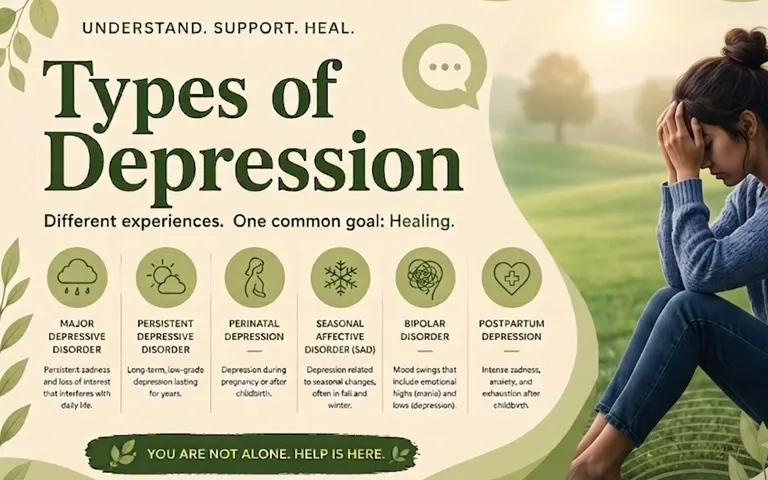
Understanding the Forms of Depression
Depression is not a one-size-fits-all condition. While many people think of depression as persistent sadness, mental health professionals recognize several different types of depressive disorders. Each type has its own symptoms, causes, duration, and treatment considerations. Understanding these differences can help individuals recognize what they may be experiencing and seek the right support.
Depression affects millions of people worldwide and can impact emotions, thoughts, physical health, relationships, and daily functioning. Some forms of depression are triggered by life events, while others may be influenced by biological, hormonal, or seasonal factors.
Let’s explore the most common types of depression and what makes each one unique.
1. Major Depressive Disorder (Clinical Depression):
Major Depressive Disorder (MDD), commonly known as clinical depression, is one of the most recognized forms of depression. It involves a persistent low mood and a loss of interest in activities that were once enjoyable.
To meet diagnostic criteria, symptoms typically need to be present for at least two weeks and cause significant difficulty in daily life.
Common symptoms include:
- Persistent sadness or emptiness
- Loss of interest in hobbies and activities
- Fatigue and low energy
- Changes in appetite or weight
- Sleep disturbances
- Difficulty concentrating
- Feelings of guilt or worthlessness
- Hopelessness about the future
Major Depressive Disorder can range from mild to severe and may occur as a single episode or return multiple times throughout a person’s life.
2. Persistent Depressive Disorder (Dysthymia):
Persistent Depressive Disorder (PDD), previously known as dysthymia, is a long-term form of depression. While the symptoms are often less intense than Major Depressive Disorder, they last much longer.
For adults, symptoms typically persist for at least two years. Children and adolescents may be diagnosed after one year of ongoing symptoms.
Individuals with Persistent Depressive Disorder often experience:
- Chronic low mood
- Low self-esteem
- Feelings of hopelessness
- Poor concentration
- Low energy
- Sleep disturbances
- Changes in appetite
Many people with PDD describe feeling as though they have been unhappy for so long that their symptoms feel like part of their personality. Because of this, the condition can sometimes go unrecognized for years.
3. Bipolar Depression:
Bipolar Depression occurs as part of Bipolar Disorder. Although depressive episodes may appear similar to Major Depressive Disorder, individuals with bipolar disorder also experience episodes of mania or hypomania.
During depressive episodes, symptoms may include:
- Intense sadness
- Fatigue
- Lack of motivation
- Social withdrawal
- Feelings of worthlessness
- Sleep and appetite changes
What distinguishes bipolar depression is the presence of manic or hypomanic episodes at other times. These periods may involve:
- Elevated mood
- Increased energy
- Reduced need for sleep
- Racing thoughts
- Impulsive decision-making
- Increased confidence
Correct diagnosis is essential because treatment approaches for bipolar depression differ from those used for other forms of depression.
4. Seasonal Affective Disorder (SAD):
Seasonal Affective Disorder is a type of depression that follows a seasonal pattern, most commonly appearing during the fall and winter months.
Researchers believe reduced exposure to sunlight may affect several biological processes, including:
- Circadian rhythm regulation
- Melatonin production
- Serotonin activity
Symptoms often include:
- Low mood during specific seasons
- Increased sleep
- Low energy
- Weight gain
- Increased appetite
- Difficulty concentrating
- Social withdrawal
Although winter-pattern SAD is most common, some individuals experience symptoms during spring or summer.
5. Postpartum Depression:
Postpartum Depression is a serious mood disorder that can occur after childbirth. It is different from the temporary emotional changes commonly referred to as the “baby blues.”
While many new parents experience mood fluctuations in the days following delivery, postpartum depression is more severe and lasts longer.
Common symptoms include:
- Persistent sadness
- Frequent crying
- Difficulty bonding with the baby
- Severe anxiety
- Feelings of inadequacy
- Sleep problems unrelated to infant care
- Loss of interest in daily activities
Hormonal changes, sleep deprivation, physical recovery, and emotional stress can all contribute to the development of postpartum depression.
6. Premenstrual Dysphoric Disorder (PMDD):
Premenstrual Dysphoric Disorder is a severe mood disorder linked to the menstrual cycle. While many individuals experience mild premenstrual symptoms, PMDD causes significant emotional and physical distress.
Symptoms generally appear during the week or two before menstruation and improve shortly after the menstrual period begins.
Common symptoms include:
- Extreme mood swings
- Irritability
- Anxiety
- Depressed mood
- Fatigue
- Difficulty concentrating
- Changes in appetite
- Sleep disturbances
Researchers believe PMDD is related to an increased sensitivity to normal hormonal fluctuations during the menstrual cycle.
7. Psychotic Depression:
Psychotic Depression is a severe form of Major Depressive Disorder accompanied by psychotic symptoms.
These symptoms may include:
- Hallucinations
- Delusions
- Paranoia
- False beliefs related to guilt, failure, or illness
The psychotic features are often consistent with the depressive mood. For example, an individual may become convinced that they have caused harm to others despite evidence to the contrary.
Psychotic depression typically requires immediate professional intervention because symptoms can significantly impair judgment and functioning.
8. Situational Depression (Adjustment Disorder with Depressed Mood):
Situational Depression develops in response to a significant life stressor or major life change.
Potential triggers include:
- Divorce or relationship breakdown
- Loss of employment
- Financial difficulties
- Relocation
- Serious illness
- Loss of a loved one
Symptoms may resemble other forms of depression, including sadness, low motivation, and hopelessness. However, the symptoms are directly connected to a specific life event and generally improve as the individual adapts to the situation.
Despite the name, situational depression can still have a significant impact on daily life and should not be dismissed as something a person can simply “get over.”
9. Atypical Depression:
Atypical Depression is a subtype of Major Depressive Disorder characterized by symptoms that differ from traditional presentations of depression.
Individuals with atypical depression may experience:
- Mood improvement in response to positive events
- Increased appetite
- Weight gain
- Excessive sleeping
- Heavy feelings in the arms and legs
- Sensitivity to rejection
Although the term “atypical” suggests rarity, this form of depression is relatively common and often begins during adolescence or early adulthood.
Final Thoughts
Depression is a complex mental health condition that can take many different forms. While the symptoms may overlap, each type of depression has unique characteristics, causes, and treatment considerations. Understanding these differences can help individuals recognize warning signs earlier and seek appropriate support.
Whether someone is experiencing any form of depression, it is important to remember that help is available at Transformation. Early recognition and professional support can make a significant difference in recovery and overall well-being. At Transformation, we believe that awareness is one of the first steps toward better mental health.