- Jofa Tower 5th floor, SB-23, Block 13 C, Main University Rd, Gulshan-e-Iqbal, Karachi.
- +92 322 3746726
- tis@transformation.com.pk

Types of Language Disorders

Career CounsellingA Detailed Guide
June 22, 2026
Understanding the Symptoms of Anxiety
June 29, 2026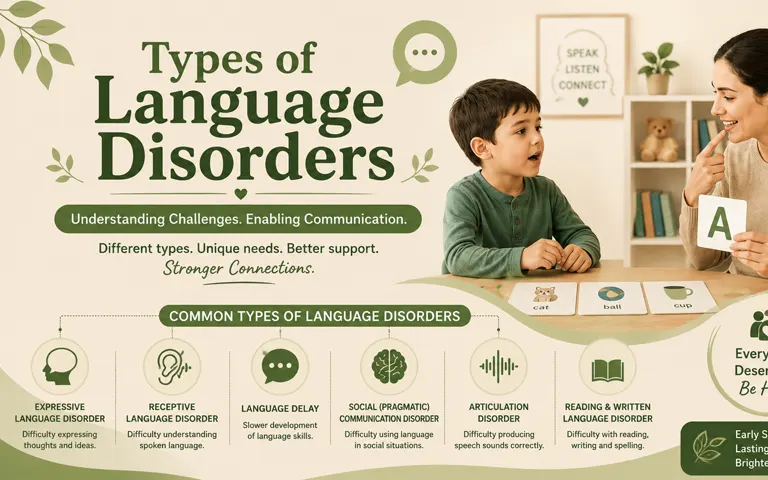
Language is much more than speaking words. It is how we understand others, express our thoughts, build relationships, learn new concepts, and interact with the world around us. When a person experiences difficulty understanding or using language, it may be due to a language disorder. These challenges can affect children and adults alike, impacting academic performance, social interactions, emotional well-being, and daily communication.
Language disorders are not simply delays in speaking. They involve persistent difficulties with understanding, processing, or expressing language that cannot be explained by hearing loss, intellectual disability, or lack of exposure to language. Every individual experiences these difficulties differently, which is why identifying the specific type of language disorder is essential for providing the right support and intervention.
Let’s explore the most common types of language disorders, their characteristics, and how understanding them can lead to better outcomes through early diagnosis and appropriate therapy.
1. Receptive Language Disorder
A receptive language disorder affects a person’s ability to understand spoken, written, or signed language. Individuals with this disorder often hear words clearly but struggle to interpret their meaning or follow conversations.
Children with receptive language disorder may appear inattentive because they frequently misunderstand instructions or need directions repeated several times. They may have difficulty answering questions appropriately, understanding stories, or learning new vocabulary. In school, these challenges can make reading comprehension and following classroom instructions particularly difficult.
Adults with receptive language difficulties may struggle to process conversations, understand complex information, or keep up with fast-paced discussions.
Some common signs include:
- Difficulty following directions
- Trouble understanding questions
- Limited understanding of vocabulary
- Difficulty remembering verbal information
- Frequently asking others to repeat themselves
2. Expressive Language Disorder
An expressive language disorder affects a person’s ability to communicate their thoughts, ideas, and feelings effectively. While they may understand what others are saying, putting those thoughts into words becomes challenging.
Children with expressive language disorder often have a smaller vocabulary than expected for their age. They may speak in short or incomplete sentences, struggle to find the right words, or have difficulty telling stories in a logical order. Conversations may become frustrating because they know what they want to say but cannot express it clearly.
Expressive language disorders do not reflect a lack of intelligence. Many individuals have excellent ideas but struggle to communicate them verbally or in writing.
Common signs include:
- Limited vocabulary
- Difficulty forming complete sentences
- Problems organizing thoughts
- Frequent pauses while searching for words
- Difficulty explaining events or experiences
3. Mixed Receptive and Expressive Language Disorder
Some individuals experience difficulties with both understanding language and expressing themselves. This is known as mixed receptive and expressive language disorder.
Because both aspects of communication are affected, these individuals often face greater communication challenges than those with only receptive or expressive difficulties. They may struggle to understand instructions while also finding it difficult to respond appropriately.
Children with mixed language disorders may appear withdrawn during conversations because they have difficulty both processing information and participating in discussions. They may rely heavily on gestures, facial expressions, or repetition to communicate their needs.
Common characteristics include:
- Difficulty understanding spoken language
- Trouble expressing thoughts clearly
- Delayed vocabulary development
- Difficulty following conversations
- Challenges with reading, writing, and classroom learning
4. Pragmatic Language Disorder
A pragmatic language disorder, also known as a social communication disorder, affects the social use of language rather than vocabulary or grammar itself. Individuals understand words and can often form sentences correctly, but they struggle with knowing how to use language appropriately in different social situations.
Communication involves much more than speaking. It requires understanding body language, facial expressions, tone of voice, personal space, and conversational rules. People with pragmatic language disorder often find these social aspects challenging.
For example, they may interrupt conversations, misunderstand sarcasm or jokes, change topics unexpectedly, or have difficulty taking turns while speaking.
Common signs include:
- Difficulty maintaining conversations
- Trouble understanding humor, idioms, or sarcasm
- Poor eye contact or inappropriate body language
- Difficulty adjusting language for different audiences
- Challenges in making and maintaining friendships
5. Developmental Language Disorder (DLD)
Developmental Language Disorder (DLD) is one of the most common childhood language disorders. It is a lifelong neurodevelopmental condition that affects language development despite normal intelligence, adequate learning opportunities, and no obvious medical condition explaining the difficulties.
Children with DLD may struggle with understanding language, expressing themselves, or both. These challenges often become noticeable during preschool years when language skills are expected to develop rapidly.
Unlike a temporary speech delay, DLD does not simply disappear with age. However, with early intervention and consistent therapy, children can develop effective communication skills and achieve academic success.
Children with DLD may experience:
- Delayed language milestones
- Difficulty learning new words
- Problems understanding complex sentences
- Challenges in telling stories
- Difficulty with grammar and sentence structure
- Academic struggles related to reading and writing
6. Aphasia
Unlike developmental language disorders, aphasia is an acquired language disorder that typically occurs following brain damage. It commonly develops following a stroke but may also result from traumatic brain injury, brain tumors, infections, or certain neurological conditions.
Aphasia affects a person’s ability to understand, speak, read, and write. The severity depends on the location and extent of brain damage.
Some individuals may understand conversations but struggle to produce words, while others may speak fluently but use incorrect or meaningless words without realizing it. Reading and writing abilities may also be significantly affected.
Common symptoms include:
- Difficulty finding words
- Speaking in incomplete or incorrect sentences
- Trouble understanding conversations
- Difficulty reading and writing
- Using incorrect words while speaking
Final Thoughts
Whether the difficulty involves understanding language, expressing thoughts, navigating social communication, or recovering language after a brain injury, every individual deserves access to effective assessment and intervention.
Early identification allows speech-language professionals to create personalized therapy plans that strengthen communication skills, improve confidence, and enhance quality of life. Language is one of the most important tools we use every day, and with the right support, individuals with language disorders can develop meaningful communication skills and reach their full potential. If you suspect that your child or a loved one is experiencing difficulties with language development or communication, don’t wait for the challenges to resolve on their own. At Transformation, our experienced professionals provide comprehensive assessments and individualized intervention programs designed to help every individual communicate with confidence. Contact us today to learn how we can support your family’s communication journey.