- Jofa Tower 5th floor, SB-23, Block 13 C, Main University Rd, Gulshan-e-Iqbal, Karachi.
- +92 322 3746726
- tis@transformation.com.pk

Types of Dyslexia Explained

9 Ways to Reduce Stress and Anxiety Naturally
July 7, 2026
Panic Attack vs Anxiety Attack: Key Differences
July 9, 2026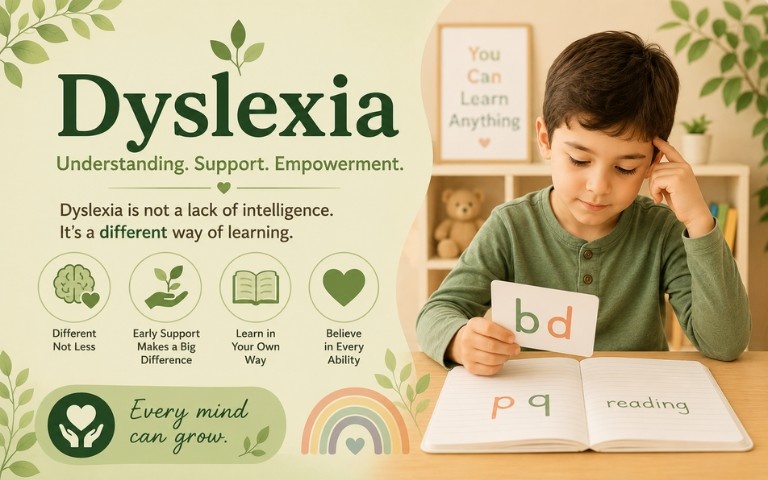
Dyslexia is one of the most common learning disabilities, affecting millions of children and adults worldwide. While many people think of dyslexia simply as difficulty reading, it is actually a complex neurodevelopmental condition that affects how the brain processes written language. Individuals with dyslexia may struggle with reading accuracy, spelling, fluency, and decoding words, even though they often have average or above-average intelligence.
One of the biggest misconceptions about dyslexia is that everyone experiences it the same way. In reality, there are several types of dyslexia, each affecting different aspects of reading and language processing. Understanding these differences helps parents, educators, and healthcare professionals develop intervention strategies that address each individual’s unique learning needs.
1. Phonological Dyslexia
Phonological dyslexia is the most common type of dyslexia. It affects a person’s ability to recognize and manipulate the sounds that make up spoken words, a skill known as phonological awareness.
Reading requires the brain to connect letters with their corresponding sounds. Individuals with phonological dyslexia struggle to make these connections, making it difficult to sound out unfamiliar words or decode new vocabulary.
Children with this type of dyslexia often find reading slow and frustrating because they cannot easily break words into smaller sound units. They may also struggle with spelling, rhyming activities, and blending sounds together.
Common signs include:
- Difficulty sounding out unfamiliar words
- Poor phonemic awareness
- Frequent reading errors
- Problems with spelling
- Difficulty identifying rhyming words
- Slow reading development
Evidence-based phonics instruction and structured literacy programs are particularly effective in helping individuals strengthen phonological processing skills.
2. Surface Dyslexia
Surface dyslexia affects a person’s ability to recognize whole words by sight. Instead of instantly recognizing familiar words, individuals rely heavily on sounding out every word they read.
While this approach works for regular words, it becomes challenging when reading irregular words that do not follow standard pronunciation rules, such as “yacht,” “colonel,” or “island.” As a result, individuals may mispronounce these words because they apply regular phonetic rules.
Reading is often accurate but noticeably slow and effortful.
Some common signs include:
- Difficulty recognizing familiar words instantly
- Slow reading speed
- Mispronouncing irregular words
- Heavy reliance on sounding out words
- Difficulty building a strong sight-word vocabulary
Intervention often focuses on repeated exposure to high-frequency and irregular words while improving reading fluency and automatic word recognition.
3. Rapid-Naming Dyslexia
Rapid-naming dyslexia is characterized by difficulty quickly retrieving familiar information from memory. Individuals know letters, numbers, colors, or objects but require extra time to name them.
This difficulty affects reading fluency because reading depends on rapidly recognizing letters and words without conscious effort. Even when decoding skills are relatively strong, reading remains slow because retrieving language information takes longer.
Children with rapid-naming dyslexia often read accurately but much more slowly than their peers.
Common signs include:
- Slow naming of letters, numbers, colors, or objects
- Reduced reading fluency
- Frequent pauses while reading
- Difficulty reading under time pressure
- Slow processing speed during academic tasks
Intervention focuses on improving reading automaticity, fluency practice, and repeated exposure to familiar words and language patterns.
4. Double-Deficit Dyslexia
Double-deficit dyslexia occurs when an individual experiences both phonological processing difficulties and rapid naming deficits. Because two core reading skills are affected simultaneously, this type is often associated with more severe reading difficulties.
Children with double-deficit dyslexia struggle to decode unfamiliar words while also reading very slowly. They may require significantly more practice and specialized intervention than individuals experiencing only one type of difficulty.
Common characteristics include:
- Difficulty sounding out words
- Slow and effortful reading
- Poor reading fluency
- Frequent spelling mistakes
- Difficulty recognizing familiar words quickly
- Challenges with reading comprehension due to slow reading speed
Early, intensive intervention that targets both phonological awareness and reading fluency offers the best opportunity for improving literacy skills.
5. Visual Dyslexia
Visual dyslexia refers to reading difficulties related to visual processing rather than vision itself. Individuals typically have normal eyesight, but the brain struggles to efficiently process written symbols, letters, and words.
Some people may experience letters appearing to move, blur, overlap, or become difficult to distinguish from one another. Others may frequently reverse similar-looking letters such as b, d, p, and q, especially during early reading development.
Visual processing difficulties can make reading tiring, reduce reading speed, and increase the likelihood of skipping or repeating words.
Common signs include:
- Difficulty distinguishing similar letters
- Losing place while reading
- Skipping words or lines of text
- Letter reversals beyond the expected developmental stage
- Reading fatigue
- Difficulty tracking across a page
Support may include structured reading instruction alongside strategies that improve visual tracking, attention, and reading organization. It’s important to note that while the term visual dyslexia is widely used in educational settings, it is not recognized as a separate clinical diagnosis by all experts, and visual symptoms may overlap with other reading difficulties.
6. Attentional Dyslexia
Attentional dyslexia affects a person’s ability to focus on individual letters or words while reading. Rather than struggling with language itself, individuals have difficulty directing visual attention to the correct part of the text.
They may accidentally combine letters from neighboring words, substitute nearby words, skip sections of text, or read words in the wrong order. These errors occur because attention shifts unintentionally during reading.
Children with attentional dyslexia often find crowded pages overwhelming and may perform better when reading isolated words than paragraphs.
Common signs include:
- Mixing letters between nearby words
- Skipping or repeating words
- Difficulty maintaining focus while reading
- Losing place on a page
- Better performance when text is spaced farther apart
- Reduced reading accuracy in lengthy passages
Intervention often includes structured reading practice, attention-building activities, and strategies that reduce visual distractions during reading tasks.
Final Thoughts
Understanding the different types of dyslexia reminds us that no two individuals experience reading difficulties in exactly the same way. Every person learns differently, and recognizing those differences allows educators and families to build on strengths while addressing specific areas of need.
At Transformation, we believe every child deserves the opportunity to develop strong literacy skills. Our team provides comprehensive dyslexia assessments and individualized intervention programs designed to help children build reading confidence and achieve their full academic potential. If you have concerns about your child’s reading development, contact us today to learn how we can support their learning journey.