- Jofa Tower 5th floor, SB-23, Block 13 C, Main University Rd, Gulshan-e-Iqbal, Karachi.
- +92 322 3746726
- tis@transformation.com.pk

Factors That Affect Mental Health

ABA Therapy Benefits & Techniques Guide
May 21, 2026
Famous People With Autism Spectrum Disorder
May 23, 2026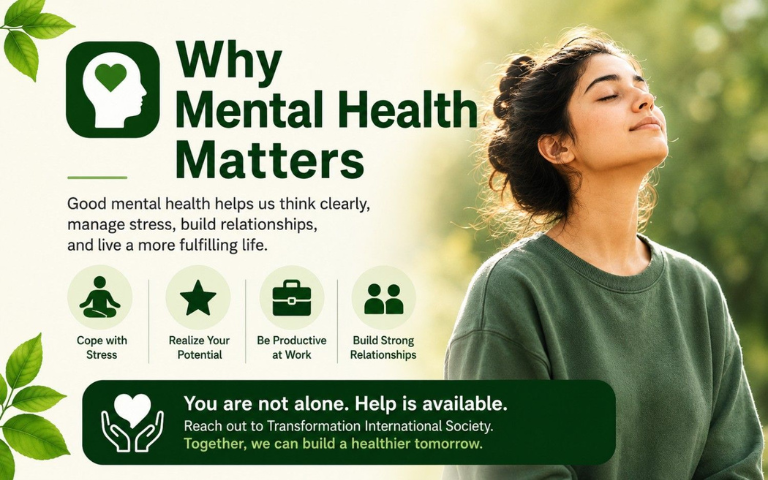
Why Mental Health Matters
One thing that we commonly do as humans is that we don’t understand that even the littlest things can affect mental health. Mental health encompasses our emotional, psychological, and social well-being. It dictates how we think, feel, and act, which influences how we handle stress and make decisions in life.
The reason for worrying about your mental health is that it is essential for the overall quality of life. It affects your ability to:
- Cope with stress
- Realize your true potential
- Showing productivity at work
- Building meaningful relationships
The crucial thing to understand when it comes to mental health is that it is and cannot be a fixed state. It is a continuously evolving spectrum where some individuals may experience a bright and optimal life, and when circumstances change, they experience severe distress or clinically recognized mental health conditions.
Factors Affecting Mental Health
There can be a myriad of reasons why an individual experiences mental health problems. For some, it can be a combination of several factors, as some people tend to be more deeply affected by certain things in life than others.
Explained below are some of the important reasons for mental health problems:
Childhood Trauma
We need to understand that our childhood shapes our personality and how we perceive things happening in our lives. Any childhood trauma, be it physical abuse, sexual abuse, emotional neglect, or traumatic experience, can alter the child’s brain chemistry and development. This, in turn, can increase the risk of mental illness as the child grows up.
The link between the brain and trauma is that it has long-term consequences. The Amygdala is a fight-or-flight response center that becomes hyperactive, making adults easily triggered and prone to misinterpreting harmless situations as dangerous.
Moreover, the Hippocampus is responsible for memory and context. This part of our brain can have a hard time separating past trauma from present reality, leading to flashbacks (PTSD), anxiety, or depression.
Genetics
There are some individuals who can inherit genes that increase the risk of certain mental health conditions. They do not directly cause mental illness on their own. However, they create a biological vulnerability to certain conditions. Mental illnesses are complex and develop from a combination of several genetic factors and environmental triggers.
Some mental health disorders involve a mix of genes and environment, while some are more heavily influenced by genetics than others. Schizophrenia and Bipolar Disorder are the conditions that are estimated to be 60% to 80% heritable. Genes play a huge role in mental disorders like these, as they can be passed down from generation to generation. Moreover, having a family member with Schizophrenia contributes as a significant risk factor.
Social Media
At first glance, you might think that social media is not as harmful as we think. However, there are deeper reasons at play here. Years of research suggest that excessive use of social media is linked with elevated rates of anxiety, depression, loneliness, and poor sleep quality. Platforms don’t directly cause mental illness for everyone, but heavy use creates a high-risk environment for youth and vulnerable populations.
The most common impact on mental health is due to unhealthy comparisons and being constantly exposed to highly curated, “perfect” lives, which lowers self-esteem and fuels dissatisfaction with our current lives.
FOMO (Fear Of Missing Out) also contributes to depression and experiencing feelings of inadequacy and anxiety. And the scariest part of social media is cyberbullying. Online harassment and victimization are direct vectors for severe psychological distress. These are just some of the effects of social media on mental health.
Relationships
Everyone in their lives goes through complicated relationships, be it with a significant other, a friend, or familial relationships. Relationship distress can severely impact your well-being, often leading to mental health issues like anxiety, depression, and chronic low self-esteem. When a dynamic involves constant conflict, emotional neglect, or gaslighting, it drains your energy and leaves you feeling trapped, or, as people say, “Constantly walking on eggshells.”
Strenuous relationships can force the brain into a prolonged stressful state, which can trigger many mental health conditions. Ongoing unhappiness or hopelessness, and fluctuating mood of the partner or infidelity in a relationship can cause depression and anxiety disorders.
Final Thoughts
Mental health is shaped by a complex interplay of biological, psychological, and social factors. These elements work together to either protect your mental well-being or increase your vulnerability to mental health conditions. These (and other) factors should be kept in mind as they play a significant role in shaping an individual’s mental health and their susceptibility towards mental illness.
If you think that you or anyone you know needs help related to mental health, reach out to us at Transformation International Society, where all your mental health problems have a solution.