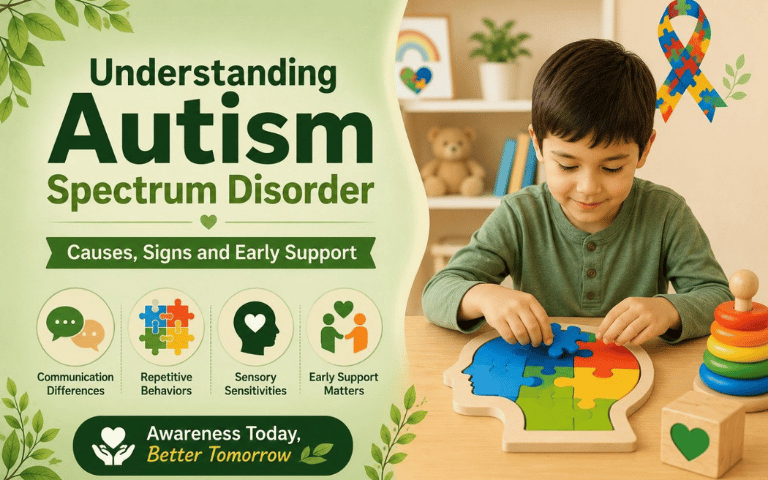
Introduction
Autism spectrum disorder is a neurodevelopmental condition that affects communication, social interaction, behavior, and sensory processing. Autism is called a spectrum because every autistic individual experiences it differently. Some may require significant daily support, while others live independently and manage daily life with minimal assistance.
ASD usually begins in early childhood, although signs may appear differently from one child to another. Some children show symptoms during infancy, while others develop typically for a period of time before differences become more noticeable.
Over the years, awareness about autism has increased, but there are still many misunderstandings surrounding its causes and symptoms. Understanding these signs can help families seek support and early intervention when needed.
What Causes Autism Spectrum Disorder?
There is no single known cause of autism. Researchers believe ASD develops due to a combination of genetic and environmental factors that affect early brain development.
It is important to understand that autism is not caused by parenting style, emotional neglect, or vaccines. These are common myths that have been scientifically disproven.
Instead, autism is believed to develop because of differences in how the brain grows and processes information.
Genetic Factors
Genetics are considered one of the strongest factors linked to autism. Research shows that autism can run in families, and certain genetic changes may increase the likelihood of developing ASD.
Some children may inherit genetic traits associated with autism, while others may develop spontaneous genetic variations without a family history.
Certain genetic conditions are also more commonly associated with autism, including:
- Fragile X syndrome
- Rett syndrome
- Down syndrome
However, not every autistic person has these conditions, and not every person with these conditions is autistic.
Environmental and Developmental Factors
Researchers also study environmental and developmental influences that may affect brain development before or during birth.
Some possible contributing factors include:
- Complications during pregnancy or birth
- Premature birth
- Low birth weight
- Advanced parental age
- Exposure to certain infections during pregnancy
These factors do not directly “cause” autism on their own, but they may contribute to developmental differences in some cases.
Autism develops very early in brain development, often before a child is born.
Common Symptoms of ASD
Symptoms of autism usually involve differences in communication, social interaction, sensory processing, and behavior. These signs can range from mild to more significant depending on the individual.
Not every autistic person will show the same symptoms, which is why autism is considered a spectrum.
Social Communication Difficulties
One of the most noticeable signs of ASD involves challenges with social communication and interaction.
An autistic child may:
- Avoid eye contact
- Respond less to their name
- Prefer playing alone
- Have difficulty understanding facial expressions or emotions
- Struggle to start or maintain conversations
- Communicate differently from peers
Some autistic individuals may speak very little, while others may have strong verbal skills but still struggle with social communication.
Repetitive Behaviors and Routines
Many autistic individuals engage in repetitive behaviors or strongly prefer routines and predictability.
These behaviors may include:
- Repeating words or phrases
- Hand flapping or rocking
- Lining up toys or objects
- Repeating the same activities
- Becoming upset by sudden changes in routine
Routines often provide comfort and reduce stress for autistic individuals.
Sensory Sensitivities
Sensory processing differences are very common in autism. Some individuals may become overwhelmed by certain sounds, textures, lights, smells, or environments.
For example, an autistic person may:
- Cover their ears around loud noises
- Avoid certain clothing textures
- Become distressed in crowded spaces
- Seek sensory input through movement or touch
Others may appear less sensitive to pain, temperature, or sound.
Sensory experiences can strongly affect emotions, focus, and daily functioning.
Delayed Developmental Skills
Some autistic children may experience developmental delays, especially in speech and communication.
Possible signs include:
- Delayed speech development
- Limited gestures or pointing
- Difficulty understanding instructions
- Delayed social interaction skills
However, developmental patterns vary greatly. Some children may develop advanced skills in areas like memory, music, numbers, or specific interests.
Emotional and Behavioral Differences
Autistic individuals may also process emotions differently.
They may:
- Struggle with emotional regulation
- Become overwhelmed during stressful situations
- Experience anxiety more easily
- Have intense focus on certain interests or hobbies
These behaviors are not signs of “bad behavior.” They are often linked to sensory overload, communication difficulties, or emotional stress.
Why Early Recognition Matters
Recognizing the signs of ASD early can help children receive support that improves communication, learning, emotional regulation, and independence.
Support may include:
- Speech therapy
- Occupational therapy
- Behavioral therapy
- Social skills training
- Educational support programs
Early intervention does not aim to “change” who an autistic person is. Instead, it helps individuals develop skills that support daily life and communication.
Final Thoughts
Autism Spectrum Disorder is a lifelong neurodevelopmental condition that affects every individual differently. While researchers continue studying its causes, current evidence shows that autism develops due to a combination of genetic and developmental factors.
Understanding the symptoms of ASD can help families, educators, and communities provide better support, acceptance, and inclusion for autistic individuals.
Awareness and early support can make a meaningful difference in helping autistic people feel understood, respected, and empowered in everyday life.
Transformation International Society continues spreading awareness about autism and providing therapy, rehabilitation, and support services for individuals and families navigating developmental and neurological conditions.