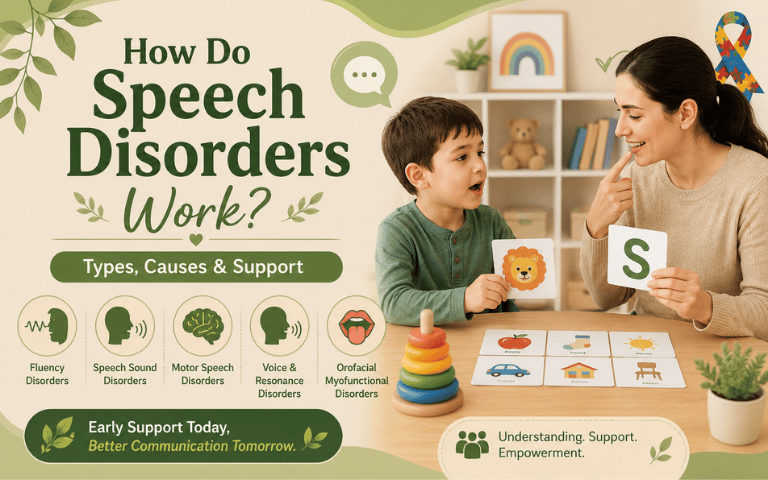
How Do Speech Disorders Work?
A speech disorder is a condition that affects a person’s ability to produce sounds that create words, produce sounds, or sentences correctly or fluently. It involves the complex coordination of the brain, nerves, tongue, lips, and vocal tract.
Some people are born with speech issues, while others can develop a speech impediment or impairment at any point. This can happen because of any injury or a medical condition that affects the ability to speak.
When children are born with speech disorders, treatment from early on is advised; otherwise, they may have difficulty learning to write and read. Therapists suggest that children might develop mental health issues like anxiety and depression because of speech disorders.
The common mistake people make is confusing speech disorder with language disorder, where a person struggles to understand the meaning of words or organize thoughts into sentences.
Major Types of Speech Disorders
Speech disorders can be classified into the following primary types:
- Fluency disorders
- Speech sound disorders
- Motor speech disorders
- Voice or resonance disorders
- Orofacial myofunctional disorders
Let’s break down these types for further clarity.
Fluency Disorders
This classification involves the flow of a person’s speech. When someone speaks, they do so smoothly and continuously. Fluency disorders involve chronic or repeated interruptions when speech is being formed.
There are two primary examples of fluency disorders:
Stuttering
It is a speech disorder that disrupts the flow of speech, causing unintended repetitions of sounds or words, prolonged syllables, or involuntary pauses. Individuals who have a stuttering problem know exactly what they want to say, but struggle to produce the words smoothly. The core symptoms of stuttering include repetitions (e.g., c-c-cat), prolongations (e.g., sssssnake), and blocks.
Doctors suggest that stuttering is not just a psychological issue or a habit. It is a complex neurodevelopmental condition strongly linked to genetics and differences in how the brain processes the motor commands required for speech.
Cluttering
Another fluency disorder is cluttering. Unlike stuttering, cluttering involves speech that is too fast, irregular, or disorganized. A person with cluttering may skip syllables, merge words together, or speak in a way that sounds confusing to listeners.
People with cluttering are often unaware that others struggle to understand them. Their speech may include frequent pauses, revisions, and fillers. Cluttering can affect communication, confidence, and social interactions if left untreated. Speech therapy helps individuals slow down, organize their thoughts, and improve clarity.
Speech Sound Disorders
Speech sound disorders occur when a person has difficulty producing speech sounds correctly. These disorders are common in children and may continue into adulthood if untreated.
The two main types are:
Articulation Disorders
Articulation disorders happen when someone struggles to physically produce certain sounds. For example, a child may replace “r” with “w” or have difficulty pronouncing sounds like “s,” “l,” or “th.”
Children often make minor pronunciation mistakes while learning to speak, but persistent difficulties beyond a certain age may indicate a speech disorder. Causes can include hearing problems, developmental delays, or structural differences in the mouth.
Phonological Disorders
Phonological disorders involve patterns of sound errors. Instead of struggling with one sound, the person has trouble understanding the sound rules of language. For instance, they may leave off the final consonant of many words or replace groups of sounds with easier ones.
Speech-language therapists use structured exercises and repetition techniques to improve speech sound production and communication skills.
Motor Speech Disorders
Motor speech disorders affect the brain’s ability to coordinate the muscle movements needed for speaking. Even when the muscles themselves are not weak, the brain may struggle to send the correct signals.
The two major motor speech disorders include:
Apraxia of Speech
Childhood apraxia of speech is a neurological speech disorder where the brain has difficulty planning the movements required for speech. Children with apraxia know what they want to say, but their mouth muscles cannot consistently form the correct sounds.
Symptoms may include:
- Difficulty combining sounds
- Inconsistent pronunciation
- Trouble with longer words
- Limited vocabulary development
Early intervention and intensive speech therapy are important for improving communication abilities.
Dysarthria
Dysarthria occurs when the muscles used for speech become weak or difficult to control. This can happen because of neurological conditions, stroke, traumatic brain injury, or diseases such as Parkinson’s disease.
Speech may sound slurred, slow, soft, or robotic. Treatment focuses on strengthening speech muscles, improving breathing control, and helping the person communicate more effectively.
Voice or Resonance Disorders
Voice disorders affect the pitch, volume, or quality of speech. A person’s voice may sound hoarse, strained, nasal, or unusually soft.
These disorders can result from:
- Vocal cord injuries
- Excessive voice use
- Infections
- Neurological conditions
- Structural abnormalities
Teachers, singers, and public speakers are more vulnerable to voice strain because they frequently use their voices for long periods.
Resonance disorders occur when airflow in the mouth or nose is blocked or altered, changing how speech sounds. For example, someone may sound overly nasal while speaking.
Treatment may involve voice therapy, breathing exercises, medical treatment, or surgery, depending on the underlying cause.
Orofacial Myofunctional Disorders
Orofacial myofunctional disorders involve abnormal movement patterns of the tongue, lips, or jaw. These issues can affect speaking, eating, swallowing, and breathing.
One common example is tongue thrust, where the tongue pushes forward during swallowing or speaking. This may lead to speech difficulties, dental problems, and trouble pronouncing certain sounds.
Speech therapists often work alongside dentists and orthodontists to treat these disorders through exercises that improve muscle coordination and oral function.
Causes of Speech Disorders
Speech disorders can develop for many different reasons. Common causes include:
- Genetic factors
- Neurological conditions
- Hearing loss
- Developmental delays
- Brain injuries
- Autism spectrum disorder
- Cleft palate or oral abnormalities
- Stroke or muscular diseases
In some cases, the exact cause may remain unknown.
Final Thoughts
Speech disorders are more common than many people realize, and they can affect both children and adults in different ways. Understanding the different types of speech disorders helps families recognize symptoms early and seek the right support. With proper treatment, therapy, and encouragement, many individuals can improve their communication skills and live confident, fulfilling lives.
If you are looking for compassionate support and therapy guidance related to speech disorders, Transformation International Society is committed to helping children and families through personalized care, awareness, and education.